
The Number Every Business Owner Should Know
Jul 06, 2026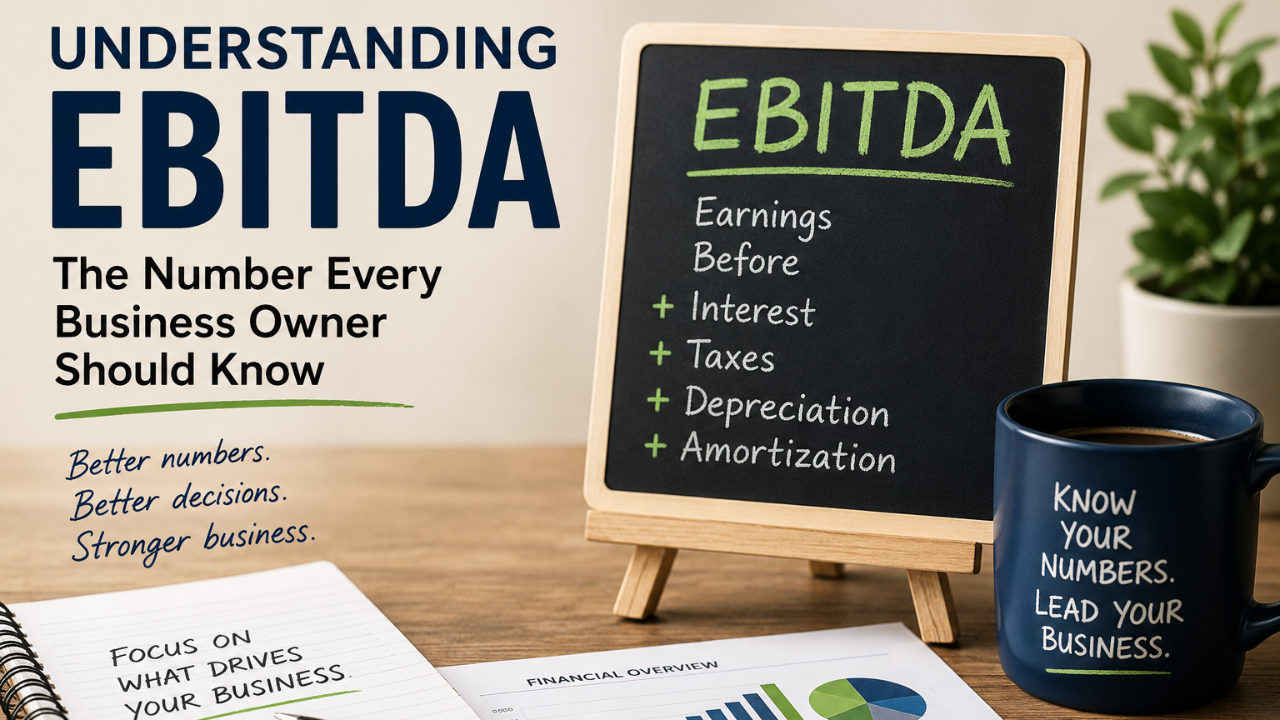
Understanding EBITDA
The Number Every Business Owner Should Know
Why lenders, buyers, and successful business owners look beyond profit.
As a business consultant, I spend a lot of time talking with business owners about their goals. Some want to increase profitability. Others want to grow their team, improve operations, or eventually sell their business. No matter what their long-term goals are, I often ask a simple question: "Do you know your EBITDA?" Surprisingly, many successful business owners have heard the term but aren't exactly sure what it means or why it matters. They know their sales, they know whether they made money last year, and they know what is in their bank account. But EBITDA often remains a mystery.
The truth is, EBITDA has become one of the most important financial measurements in business. Banks use it. Investors use it. Buyers use it. Business advisors use it. Most importantly, business owners can use it to better understand the true operating performance of their business. Whether you plan to own your business for another 30 years or eventually sell it, understanding EBITDA can help you make better decisions today.
- What Is EBITDA?
EBITDA stands for Earnings Before Interest, Taxes, Depreciation, and Amortization.
At first glance, it sounds like an accounting term that only financial professionals need to understand. In reality, it is simply a way of measuring how well a business performs from its normal day-to-day operations.
Think of EBITDA as asking one important question:
"How profitable is this business before considering how it is financed, taxed, or how accounting rules affect the financial statements?"
For example, two businesses may provide the exact same service and generate the same revenue. One business may have significant loan payments while the other has no debt. One owner may have recently purchased expensive equipment that increases depreciation expenses. Their net profits may look very different, but their actual business operations could be almost identical.
EBITDA helps remove those differences so the businesses can be compared more fairly.
- Why Doesn't Profit Tell the Whole Story?
Profit is extremely important. Every healthy business must eventually become profitable. However, profit alone does not always tell the complete story.
Net income includes items that may have very little to do with how well the business actually operates.
For example:
- One owner may finance equipment while another pays cash.
- Tax strategies vary from one business to another.
- Older equipment may have different depreciation expenses than new equipment.
- Different ownership structures create different financial statements.
These differences make it difficult to compare one business with another.
EBITDA removes many of these variables so owners, lenders, and buyers can evaluate the operating performance of the business itself rather than the owner's financial decisions.
Think of it like comparing athletes. If one runner carries a heavy backpack and another does not, their finishing times are not directly comparable. EBITDA attempts to remove the "backpack" so you can compare each business on a more equal basis.
- Why Banks, Buyers, and Investors Care About EBITDA
When someone wants to lend money to or purchase a business, they want to know one thing above almost everything else:
Can this business consistently generate cash from its operations?
That is where EBITDA becomes valuable.
Banks often look at EBITDA when deciding whether a business can comfortably make future loan payments.
Investors use EBITDA to compare opportunities across different industries and companies.
Business buyers use EBITDA because it provides a consistent way to evaluate businesses before considering how each owner manages taxes, debt, or accounting methods.
Even if you have no intention of selling your business, knowing your EBITDA helps you understand how outside professionals may evaluate your company. It also provides another way to measure the financial health of your business over time.
- EBITDA Helps You Compare "Apples to Apples"
One of the greatest benefits of EBITDA is that it creates a more consistent comparison between businesses.
Imagine comparing two landscaping companies.
Both generate $2 million in annual revenue.
Company A owns all of its equipment outright.
Company B recently financed new trucks and equipment.
Company B has much larger interest expenses and depreciation, causing its net profit to appear lower.
Does that automatically mean Company A is the better business?
Not necessarily.
When those financing and accounting differences are removed, the two companies may actually perform very similarly.
This is why EBITDA has become such a common financial measurement. It allows owners, lenders, investors, and buyers to compare businesses using a more standardized measurement of operating performance.
It isn't perfect, but it creates a much more meaningful comparison than looking only at net income.
- Every Business Owner Should Know Their EBITDA
Many small business owners focus almost entirely on sales, profit, or the balance in their checking account. While those numbers are certainly important, they don't always provide the complete financial picture.
Understanding your EBITDA gives you another valuable tool to evaluate your business.
It can help you:
- Track operating performance over time.
- Compare your business with industry benchmarks.
- Measure improvements in efficiency.
- Better understand conversations with bankers and advisors.
- Prepare for future growth opportunities.
- Build a stronger and more valuable business.
You don't have to become an accountant to understand EBITDA. You simply need to recognize that it is another way of measuring the health of your business.
The more you understand your numbers, the more confident you become in making business decisions.
Conclusion
Every business has two financial stories.
The first story is how much money it earns today.
The second story is how effectively the business operates and how others may evaluate its financial performance.
EBITDA helps tell that second story.
Understanding EBITDA won't magically make your business more profitable. However, it gives you another way to measure progress, identify opportunities, and communicate with lenders, investors, advisors, and future buyers using one of the most common financial measurements in business.
Next week, we'll build on this foundation by exploring how EBITDA is used to estimate the value of a business and why two companies with similar profits can sell for dramatically different prices.
Thrive Action Tip
This week, take a few minutes to meet with your accountant or review your financial statements and ask one simple question:
"What is my current EBITDA?"
Don't worry about memorizing every accounting rule. Simply begin understanding this important measurement and start tracking it each quarter. Businesses that consistently understand and monitor their financial performance are better positioned to make intentional, consistent, and incremental improvements that lead to long-term success.
Don't just survive... THRIVE!